Diploma in Pharmacy (D. Pharm)
Shape your future in healthcare with our comprehensive pharmacy programme
Course Overview
The Diploma in Pharmacy (D. Pharm) is a two-year full-time program designed to equip students with the essential knowledge and practical skills needed to work as pharmacy professionals in various healthcare settings. Approved by the Pharmacy Council of India (PCI), the course follows a structured curriculum that blends theoretical instruction with hands-on laboratory training.
Course consists of 3 parts:
- Part I - D. Pharm 1st year
- Part II - D. Pharm 2nd Year
- Part III - Practical Training
Eligibility Criteria
To be eligible for admission to the Diploma in Pharmacy (D. Pharm) program, applicants must meet the following prerequisites:
- Educational Qualifications:
- Passed the class 12th examination under the (10+2) education system from a recognized board
- Must have studied Physics, Chemistry, and Mathematics/Biotechnology/Biology as compulsory subjects
- Minimum 45% marks in these three main subjects for unreserved category candidates
- Minimum 40% marks for SC/ST/OBC/PwD candidates of Chhattisgarh
- Must have passed all three main subjects
- Age Limit: There is typically no upper age limit for admission
Program Objectives
To provide a strong foundation in pharmaceutical sciences, including pharmacology, pharmaceutical chemistry, and pharmaceutics.
To train students in the safe and effective handling, dispensing, and management of medications.
To instill ethical practices, communication skills, and a patient-centered approach in all aspects of pharmacy care.
To prepare students for employment in hospitals, community pharmacies, pharmaceutical companies, and other healthcare-related fields.
Importance of Part III – Practical Training (Internship)
Part III of the D. Pharm course focuses on practical training, which is a mandatory component after completing the first and second academic years. This training typically lasts for a minimum of 500 hours over a period of 3 months in a hospital, community pharmacy, or under a registered pharmacist in an approved setting.
Why Part III is Crucial:
Real-World Experience
It bridges the gap between theoretical learning and practical application, allowing students to work in actual pharmacy environments.
Patient Interaction
Students learn how to communicate effectively with patients, counsel them on medication use, and understand real-life healthcare scenarios.
Workplace Readiness
Interns get exposed to standard operating procedures, inventory management, prescription verification, and regulatory documentation.
Professionalism and Ethics
The training helps develop discipline, accountability, and ethical decision-making in a healthcare setting.
Regulatory Requirement
Completion of Part III is essential to be eligible for registration as a Pharmacist with the State Pharmacy Council, which legally authorizes the graduate to practice pharmacy.
Builds Career Confidence
The experience gained during internship often leads to job offers and helps students choose their career path—retail, hospital, industrial pharmacy, etc.
Teaching Methodology
Our Diploma in Pharmacy program employs a dynamic and student-centered teaching approach to ensure comprehensive learning and skill development. We blend traditional instruction with modern educational practices to prepare students for both academic success and professional excellence.
Key Teaching Approaches
Interactive Lectures
Core theoretical concepts are delivered through engaging classroom sessions, supported by visual aids, presentations, and Q&A discussions to enhance understanding.
Hands-On Practical Sessions
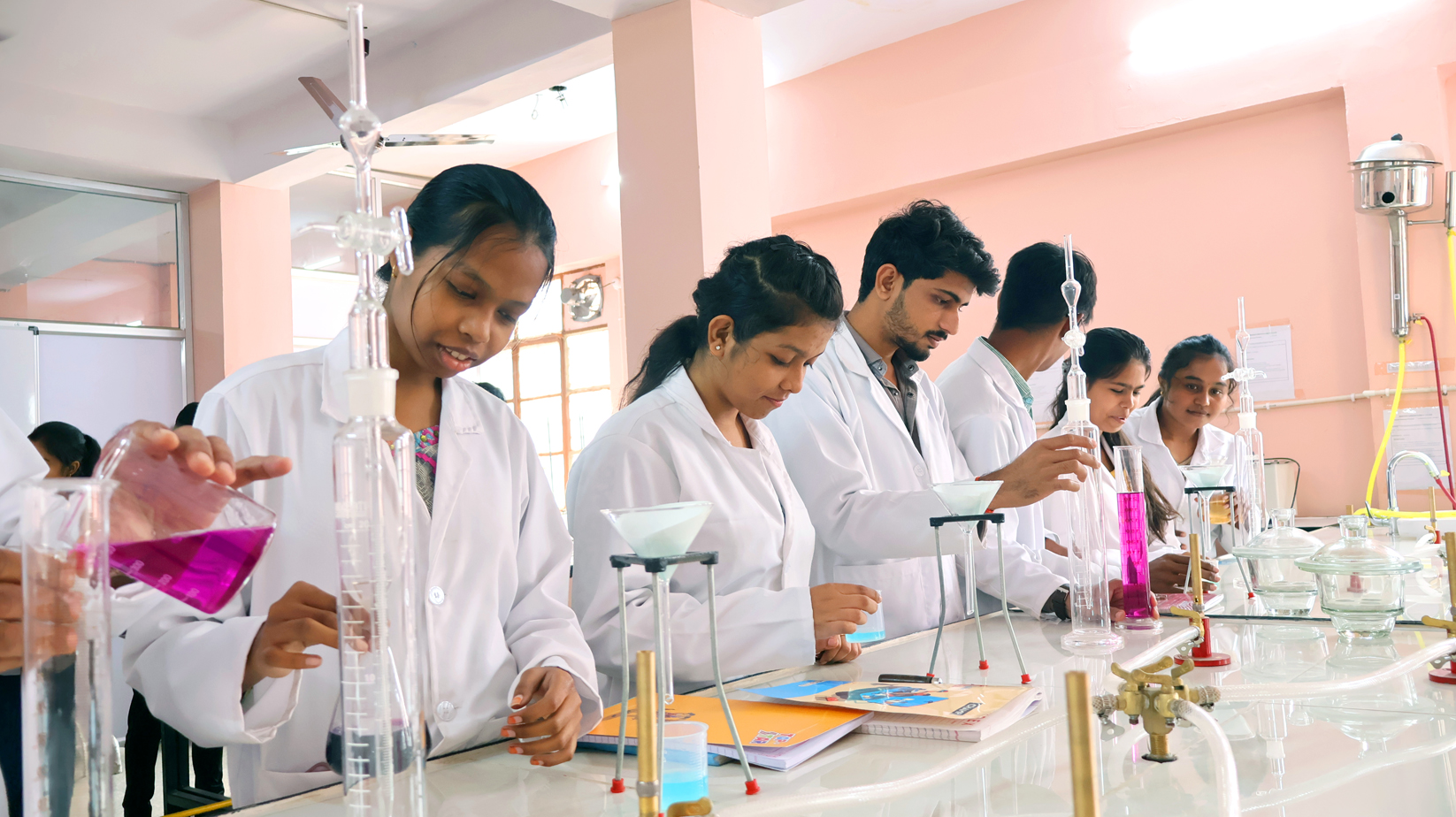
Students apply theoretical knowledge in well-equipped laboratories, conducting experiments and learning essential pharmaceutical techniques through guided practice.
Tutorials and Group Discussions
Small-group sessions help reinforce complex topics, encourage peer-to-peer learning, and foster collaborative problem-solving.
Case Studies and Role Plays
Real-life healthcare and pharmacy scenarios are analyzed through case studies and simulations, helping students build critical thinking and decision-making skills.
Guest Lectures and Industry Talks
Professionals from hospitals, pharmaceutical companies, and regulatory bodies are invited to share insights, exposing students to current trends, challenges, and opportunities in the field.
Clinical Exposure and Field Visits
Students gain firsthand experience through visits to hospitals, community pharmacies, and manufacturing units, linking classroom learning with industry practices.
Continuous Assessments
Regular class tests, assignments, and practical evaluations ensure consistent academic progress and understanding.
Ready to Start Your Pharmacy Career?
Join our Diploma in Pharmacy program and take the first step toward a rewarding career in healthcare.
Apply Now